Data Readiness: The Step You Can’t Skip 

You’ve heard the buzz: PIM, MDM, data governance, platform rollouts. For years, companies have chased the perfect tech stack and launched multi-year initiatives to “manage” their data. 

But here’s the question no one stopped to ask: 

Is your data even ready to be managed? 

We assumed clean, consistent, enriched data would just show up at the system’s front door. That assumption? It’s costing businesses time, money, and credibility. Because messy input equals messy output, no matter how advanced the platform. 

You probably know the pain: 

  • Reports questioned. 
  • Launches delayed. 
  • Teams are firefighting the same issues over and over. 
     

It’s not because people aren’t working hard. They are. But when the foundation isn’t stable, nothing stacked on top of it holds for long. 

The answer isn’t just another system. It’s smarter preparation. 

That starts with data readiness. 

Let’s Get Clear: What Is Data Readiness? 

Think of it like prepping a canvas before a painting. 

Data readiness refers to the preparation that enables systems like PIM or MDM to perform their functions effectively. It’s the foundation work that ensures your data is clean, complete, and aligned with how your business actually runs. 

It’s not just a one-time cleanse. It’s a capability. 

One that: 

  • Automates profiling, standardisation, and enrichment. 
  • Flag issues before they become problems. 
  • Prepares your data to flow seamlessly across systems and channels. 

The goal isn’t perfection. It’s trust. Usability. Consistency. Data your teams can count on and act on. 

Because if your platform is constantly reacting to messy inputs, then your people are constantly reacting too. 

And that cycle? It never stops. 

What Does Data Readiness Involve? 

It’s not a black box. It’s a set of smart, deliberate actions. 

Here’s what goes into making data business-ready: 

1. Cleansing 

Start with the basics: remove duplicates, correct errors, and weed out outdated values. 

If your team is fixing the same issue every quarter, that’s not governance, it’s a broken process. 

2. Standardisation 

Different formats, naming conventions, and abbreviations all wreak havoc downstream. Data readiness ensures a consistent language, whether it’s product names, units, SKUs, or attributes. 

3. Enrichment 

Missing product descriptions? Incomplete specs? Half-filled attribute fields? 

Readiness means filling in the blanks, automatically where possible, so every product record is complete and channel-ready. 

4. Mapping & Alignment 

Your data doesn’t live in one place. ERP, eComm, suppliers, distributors, they all speak slightly different dialects. 

Data readiness bridges those gaps, aligning structures and meanings across systems. 

5. Validation Rules 

What does “good” look like? 

Define it. Encode it. Build rules that flag non-compliant data before it slows you down. That way, you catch the issues before they become delays. 

Why Does This Matter So Much? 

Because systems don’t magically fix data. They manage what they’re given. 

Here’s what happens when you skip readiness: 

  • You spend months just prepping data to be loaded. 
  • Reports still don’t align. 
  • Channels get incomplete content. 
  • Teams don’t trust what’s in the system, so they go back to Excel. 

And when that happens? The value of your expensive tech stack plummets. 

Let’s put it plainly: 

Good data makes your tech better. Bad data makes it irrelevant. 

Governance vs. Readiness: Know the Difference 

Most companies have spent the last decade building governance models. And that’s not a bad thing. 

But here’s the distinction: 

  • Governance is how you manage data after it enters the system
  • Readiness is how you prepare it before it gets there.  Both matter. But one has to come first. 

So, Where Do You Begin? 

No, you don’t need to rip and replace your stack, just yet. 

No, you don’t need to start from scratch, just yet. 

You start with an honest audit: 

  • Where is your data coming from? 
  • Where is it breaking down? 
  • Where are the trust gaps? 
  • What does the business need the data to actually do? 

 Once you’ve mapped that out, you can build a targeted, practical roadmap. One that modernises your data without blowing up everything you’ve already built. 

Remember: the system isn’t the point. The data is. 

How Data Readiness Supports MDM and PIM 

If you’ve invested in a PIM or MDM platform, or you’re considering one, you might think that’s the fix. 

But even the best platforms can’t solve data quality on their own. What they can do is amplify what they’re given. 

Data readiness is what makes those platforms shine. 

It ensures: 

  • Faster time-to-value. 
  • Fewer post-launch cleanups. 
  • Better automation outcomes. 
  • More trust from business users. 

It’s not a nice-to-have. It’s what makes the whole investment work. 

What Good Looks Like 

When your data is ready, everything changes. 

  • Product launches move faster. 
  • Channel syndication becomes scalable. 
  • AI tools get the clean inputs they need. 
  • Reports are reliable. 
  • And business users actually use the systems. 


No more Excel workarounds. No more duplicate firefighting. No more launch delays. 

Just clean, connected, usable data that drives outcomes. 

That’s the goal. 

And it’s achievable. 

The Bottom Line 

Data readiness isn’t another project. 

It’s a mindset shift. 

It’s recognising that systems don’t create quality data. People and processes do. And when you embed readiness into your operations, you’re not just managing data, you’re unlocking its potential. 

The faster you stop assuming clean data will just show up, the faster you can start building a strategy that actually delivers. 

So before the next replatform. Before the next budget cycle. Before the next wave of tools: 

Start with readiness. 

Because that’s where real transformation begins. 
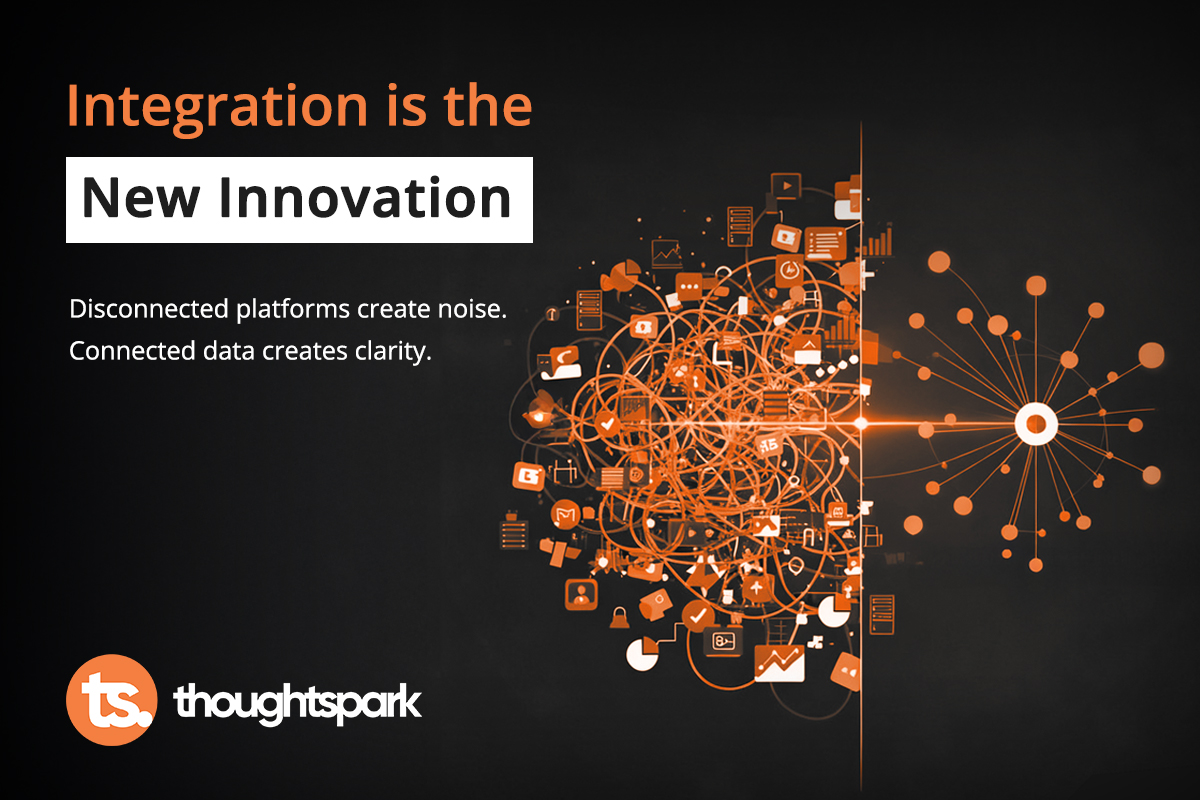
Integration Over Installation: Why Platforms Alone Don’t Solve Problems

Enterprises today are surrounded by technology. Every business function, from marketing and supply chain to product management, runs on a digital platform. New tools promise automation, visibility, and efficiency. Yet, despite these heavy investments, many organizations still struggle to make sense of their data, streamline processes, or see the outcomes they expect.

The problem isn’t the lack of technology, it’s the lack of integration.

While installation might give you systems, integration gives you synergy. It’s what turns scattered technology into connected intelligence and allows data to move seamlessly across the business.

Because you can’t buy your way into transformation, you have to integrate your way into it.

The Illusion of Progress

The modern enterprise tech stack often looks impressive on paper. There’s an ERP to manage operations, a CRM for customer relationships, a PIM for product data, and maybe even an analytics platform for insights.

But having technology doesn’t automatically mean having transformation.

The moment these systems start working in silos, the illusion of progress begins.

Teams operate within their respective platforms, each believing they have the most accurate version of truth. Marketing’s numbers differ from sales. Product data doesn’t sync with e-commerce channels. Finance waits days for consolidated reports. And leaders make decisions on partial insights rather than complete information.

This is what happens when organizations install platforms but don’t integrate them.

The tools are there, but the intelligence is not.

Integration: The Real Enabler of Business Intelligence

Integration is not a technical checkbox. It’s a business strategy that determines how effectively your data supports measurable outcomes.

When your systems and data sources are interconnected, they form an ecosystem that continuously communicates, updates, and refines itself. The insights become richer, actions faster, and collaboration stronger.

Here’s what true integration enables:

  1. Unified Data Flow – Information travels freely across departments. Sales can instantly access updated inventory data. Marketing can view real-time customer preferences. Everyone operates from the same, consistent dataset.
  2. Smarter Decision-Making – Integration allows data from different systems to combine and form insights that are otherwise invisible. You can connect marketing performance with supply chain outcomes or product attributes with customer satisfaction.
  3. Operational Agility – Integrated systems reduce duplication, manual reconciliation, and waiting time. Processes become faster and far more predictable.
  4. Customer-Centricity – A connected ecosystem lets you understand your customer across touchpoints. Every department contributes to delivering one unified experience.

When your data, processes, and people are connected, your organization becomes intelligent — not just digital.

Why Platforms Alone Don’t Deliver Transformation

Most companies fall into the trap of chasing platforms because they equate new tools with new capabilities. But without a backbone of integration, even the most advanced platform turns into an expensive data silo.

Here’s why relying on platforms alone doesn’t work:

  • Each Platform Solves a Fragment, Not the Whole: A PIM might perfect product data, but unless it’s connected to the broader ecosystem of tools and platforms within the organization, it can’t ensure that the same data is reflected across sales and supply chain systems.
  • Manual Reconciliation Becomes the Norm: Teams spend time aligning exports, managing duplicate records, or validating mismatched fields — defeating the purpose of automation.
  • The Customer Experience Becomes Fragmented: Disconnected systems mean inconsistent messaging, pricing errors, and delays in service — all of which impact customer trust.
  • ROI Remains Low: Technology investments fail to deliver measurable outcomes because the insights are trapped within silos.

Installation gives you tools, integration gives you transformation.

From Implementation to Orchestration

Every platform performs a function. But integration orchestrates those functions into harmony.

A well-integrated system ensures that a single action in one platform triggers relevant updates everywhere else — automatically and intelligently.

For instance:

  • When new product data enters your PIM, it should flow seamlessly into your e-commerce platform, MDM, and CRM.
  • When a customer places an order, the ERP should instantly update inventory, notify logistics, and trigger analytics tracking.
  • When the data quality in one source improves, that improvement should cascade across all connected systems.

This is what integration-led orchestration looks like — where systems are not just connected technically but functionally aligned to business goals.

The Strategic Advantage of Integration

Integration gives businesses a level of visibility and control that platforms alone cannot. It moves organizations from being data-rich to being insight-driven.

Here are the strategic advantages integration brings:

  1. Accelerated Innovation

 With integrated systems, launching new products, entering new markets, or adding new channels becomes easier. Your existing data and processes scale effortlessly.

  • Enhanced Collaboration

 Integration breaks silos between teams. Marketing, sales, and product teams can share data fluidly, improving coordination and speed of execution.

  • Improved Governance

 Consistency and traceability improve when every system operates from the same data logic. It strengthens compliance and audit readiness.

  • Future-Readiness

 Integrated architectures are easier to evolve. As your business adds new technologies — AI, automation, IoT — they can plug into the ecosystem without disruption.

Integration ensures that transformation isn’t tied to a single platform but is embedded into the company’s DNA.

The Cost of Ignoring Integration

When integration is neglected, the hidden costs multiply. Businesses spend more time fixing errors, cleaning data, and realigning processes. Opportunities get delayed, insights lose context, and customer trust erodes.

Inconsistent product information across channels can affect brand credibility. Inaccurate reporting can skew strategy. And the longer integration is postponed, the harder it becomes to implement later.

Ignoring integration is like building a high-tech skyscraper on a weak foundation — impressive from the outside, unstable from within.

Building Integration Into Your Data Strategy

Integration doesn’t have to be overwhelming. It starts with small, deliberate steps:

  1. Define Your Core Systems – Identify the systems that hold the most critical data — your PIM, MDM, ERP, CRM, etc.
  2. Map the Data Flow – Understand how data should move between these systems and where the breaks currently exist.
  3. Establish Governance Rules – Standardize definitions, ownership, and quality parameters for data.
  4. Adopt Middleware or Integration Layers – Use APIs or cloud-based connectors to ensure systems can talk to each other seamlessly.
  5. Measure, Monitor, and Evolve – Treat integration as a living process. As new tools and data sources emerge, continue to align them within your ecosystem.

Integration isn’t a one-time task; it’s an evolving framework that grows as your business scales.

Conclusion: Integration Is the Real Transformation

Transformation doesn’t come from how many platforms you’ve implemented — it comes from how intelligently they work together.

When systems connect, data flows freely, decisions align faster, and experiences become seamless. Integration bridges the gap between technology and business outcomes — turning tools into enablers and data into intelligence.

In a digital world overflowing with platforms, integration is what creates purpose.

 Because installation builds infrastructure — integration builds intelligence.

ThoughtSpark and Sharedien partner to unlock the power of data and content intelligence

We’re excited to announce our partnership with Sharedien, a cloud-native Digital Asset & Content Management solution.

Sharedien combines powerful AI and cloud-native technology to transform how businesses manage and deliver content. Their intelligent and flexible platform makes them an ideal partner in helping organizations connect data-driven insights with impactful business outcomes.

Driving intelligent content operations

The partnership between ThoughtSpark and Sharedien is rooted in a shared belief: that data and content must work hand in hand to enable smarter decisions, better customer experiences, and faster time to value.

“Our shared vision is clear: empower businesses to make faster, smarter, and more confident decisions. Together, Sharedien and ThoughtSpark combine best-in-class content technology with advanced data expertise to unlock real, measurable impact.”
-Simon Putzer, CEO GTM at Sharedien.

Enabling decisions that drive results

By combining ThoughtSpark’s capabilities in Data and AI, with Sharedien’s powerful content hub, we equip organizations with the tools they need to turn insights into action-at scale

“Our mission is to simplify the complex and deliver results. In Sharedien, we’ve found a partner that complements our values and technology approach perfectly. “
– Samarth Mehta, General Manager India at ThoughtSpark

Together, we’re setting a new standard for how data and content come together to drive smarter business outcomes.

About Sharedien

Sharedien is the leading content operations system that helps companies worldwide tell consistent and compelling stories. The platform transforms the way companies create, manage and deliver digital content, offering a seamless, intelligent and scalable solution. The cloud-native, AI-powered platform is the fastest and most flexible on the market, making it the ideal solution for marketing, product and agency teams. Companies in more than 90 countries rely on Sharedien, including Beiersdorf, OTTO and Liebherr. Thanks to Sharedien, global companies are unleashing efficiency and creativity across their entire content supply chain. Headquartered in Zurich, Switzerland, Sharedien is shaping the future of digital asset and content management.
www.sharedien.com

About ThoughtSpark

At ThoughtSpark, we’re redefining what it means to be data-driven. We help organizations
harness the power of data and AI. With deep expertise in PIM, MDM, and enterprise data
management, ThoughtSpark helps businesses build future-ready data ecosystems that
drive digital transformation and intelligent decision-making.

As a strategic enabler within the Syndigo ecosystem, ThoughtSpark combines deep
product knowledge with a forward-thinking approach, empowering partners and clients to
deliver better, faster, and smarter business outcomes.

Learn more about ThoughtSpark at thoughtspark.com or follow along on LinkedIn.