
Introduction:
Imagine this, It’s Monday morning.
Your Head of Sales presents a report showing a 15% increase in customer retention.
Ten minutes later, your CFO walks in with a spreadsheet showing a 5% decline.
The room goes quiet.
This isn’t a reporting issue. It’s a leadership problem.
In 2026, the benefits of Master Data Management are impossible to ignore, data is the lifeblood of every organization—but for most enterprises, that data is fragmented, duplicated, and unreliable. Customer records live in dozens of systems. Product codes don’t match across platforms. Teams argue over whose numbers are correct.
According to Gartner, poor data quality costs organizations an average of $12.9 million per year.
At ThoughtSpark, we see this pattern repeatedly across B2B SaaS and data-driven enterprises. The companies that win are not the ones with the most data—they are the ones with the most trusted data.
That is where the benefits of Master Data Management (MDM) move from a “nice-to-have” initiative to a business-critical capability.
What Is Master Data Management (MDM)?
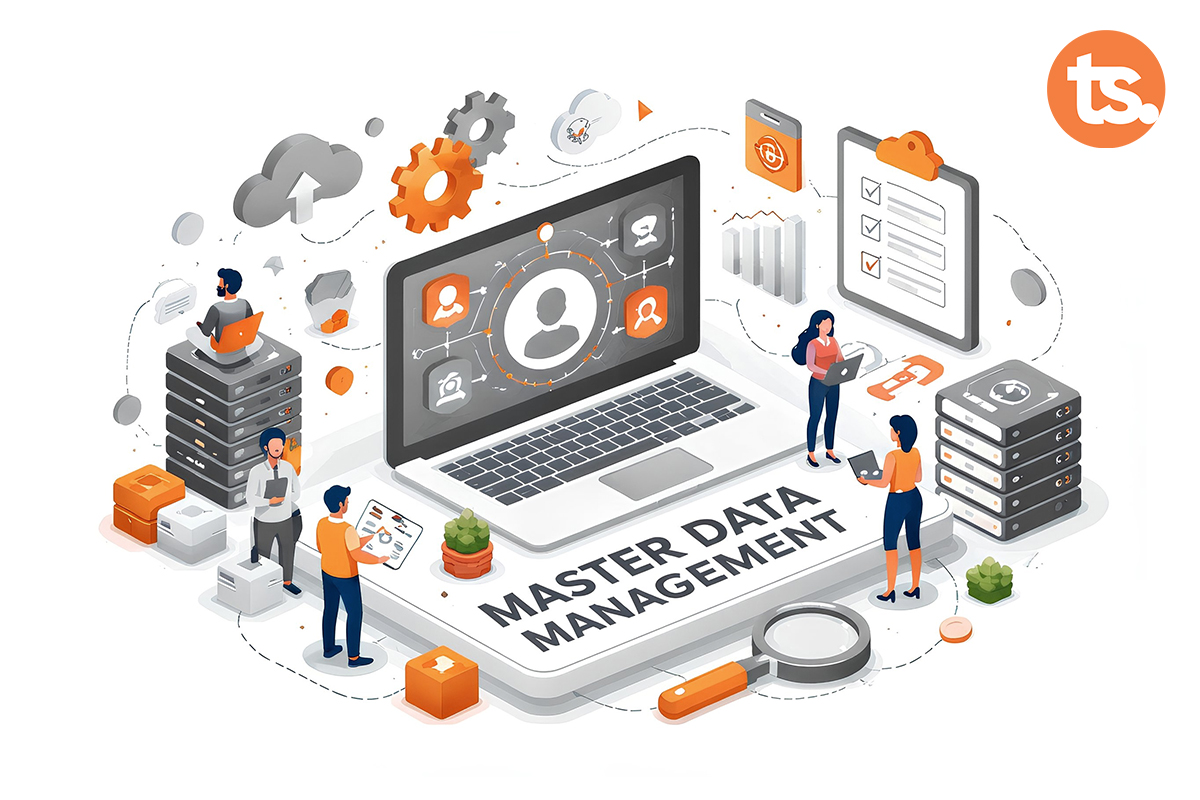
Master Data Management (MDM) is the discipline of creating and maintaining a single, trusted source of truth for an organization’s most critical business data—across all systems, teams, and processes.
MDM goes beyond basic data cleaning. It establishes:
- Governance
- Ownership
- Standardization
- Ongoing accuracy
In simple terms, MDM ensures that everyone in the organization works from the same, correct information.
Core Types of Master Data
- Customer data: names, addresses, preferences, interaction history
- Product data: SKUs, descriptions, specifications, pricing
- Supplier data: vendors, contracts, performance metrics
- Location data: offices, warehouses, retail locations
- Asset data: equipment, infrastructure, digital assets
- Employee data: roles, hierarchies, skills
Simple example:
Without MDM: Customer John Smith has 3 different addresses in your systems. Marketing emails the wrong person. Shipping sends to an old address. Sales can't reach him.
With MDM: One correct record. Everyone sees the same info. No mistakes.
Think of MDM as your company's single source of truth. When everyone works from the same information, everything runs smoother.
What Happens Without Master Data Management?
Before exploring the benefits, it’s important to understand the alternative.
Without MDM, organizations experience:
- Conflicting reports across departments
- Poor customer experiences
- Failed digital and AI initiatives
- Compliance risks and regulatory exposure
- Rising operational costs
- Slow, uncertain decision-making
In short, growth becomes harder and risk increases.
10 Key Benefits of Master Data Management
1. Establish a Single Source of Truth Across the Company
Most companies store the same data in multiple systems, and each team views it differently. This creates confusion, inconsistent reports, and slow decision-making. Master Data Management brings all critical business data into one trusted source that everyone uses.
Real-world example:
Your sales team says you have 50,000 customers. Marketing says 65,000. Finance says 48,000. Who's right? Nobody knows because each department tracks customers differently.
With MDM, everyone sees the same number: 52,347 unique customers. No confusion, no wasted time reconciling spreadsheets.
2. Accurate, Duplicate-Free Data Across All Systems
Data errors and duplicates slowly pile up in most systems and affect reporting and operations. Master Data Management automatically cleans, standardizes, and merges records so data stays accurate over time.
Real-world example:
A customer places an order online. They type their address as "123 Main St" but your system has "123 Main Street" from a previous order. Now you have two records for the same person.
MDM spots this instantly, merges the records, and updates everything. One customer, one accurate profile.
3. Customers Get Better Experiences
When customer data is scattered, service feels disconnected. Master Data Management brings all customer information together so every team sees the full picture.
Real-world example:
Sarah buys running shoes from your website on Monday. On Tuesday, she visits your store. The sales associate has no idea about her online purchase and tries to sell her the same shoes again. Awkward.
With MDM, the store associate sees Sarah's online order immediately and says, "I see you ordered running shoes! Can I help you find matching workout gear?" Sarah feels recognized and valued.
4. Leaders Make Faster, Better Decisions
Leaders often lose time validating data before they can act. Master Data Management ensures reports and dashboards are accurate, so decisions happen faster.
Real-world example:
Your CEO asks, "What's our best-selling product category this quarter?"
Without MDM, you spend 3 days collecting data from different systems, reconciling differences, and building a report. By then, the meeting is over.
With MDM, you pull up a dashboard and answer in 30 seconds: "Athletic footwear, up 18% from last quarter."
5. You Stay Compliant and Avoid Fines
Meeting data regulations is difficult when information is spread across systems. Master Data Management helps you find, control, and manage data consistently.
Real-world example:
A customer in Europe requests deletion of their data under GDPR (their legal right). You think you've deleted everything, but their information is still in 3 other systems you forgot about. That's a violation worth up to €20 million in fines.
With MDM, you search once, find all instances of that customer's data across every system, and delete everything properly. Compliance complete.
6. Operations Run Smoother and Cost Less
Disconnected data leads to duplicated work, errors, and unnecessary spending. Master Data Management helps eliminate this waste by standardizing data across systems.
Real-world example:
Your company orders office supplies from the same vendor through 5 different purchasing systems. You're paying 5 different prices for the same pens because nobody realizes you're all buying from the same supplier.
MDM reveals you're actually buying from "ABC Office Supply," "ABC Office Supplies Inc," and "ABC Supply Company"—all the same vendor. You consolidate, negotiate better pricing, and save $200,000 annually.
7. Digital Projects Actually Succeed
New technology struggles when built on poor data. Master Data Management provides clean, consistent data that digital initiatives depend on.
Real-world example:
You launch a fancy new mobile app so customers can track orders. But the app shows wrong delivery dates because it's pulling from old, inaccurate data. Customers complain. The app fails.
With MDM, the app pulls from your single source of truth. Delivery dates are accurate. Customers love it. The app succeeds.
8. Someone Is Actually Responsible for Data Quality
When no one owns the data, quality quickly declines. Master Data Management clearly defines who is responsible for each type of data and how it should be managed.
Real-world example:
Product descriptions on your website are a disaster. Some are detailed, some are empty, some have typos. Nobody knows whose job it is to fix them, so nobody does.
MDM establishes that the Product Marketing team owns product data. They have standards, review processes, and accountability. Product pages improve. Sales increase.
9. AI and Analytics Finally Work Right
AI and analytics depend on clean data. When data is inconsistent, results are unreliable. Master Data Management ensures advanced tools work with accurate information.
Real-world example:
You build a machine learning model to predict which customers will buy next month. But your training data includes duplicate customers, so the model thinks John Smith and J. Smith are different people. The predictions are garbage.
With MDM, the model trains on clean, accurate data. It correctly identifies high-probability buyers. Your marketing campaigns hit the right people and sales jump 30%.
10. Your Data Becomes a Revenue Source
When data is accurate and well-managed, it can create new revenue opportunities beyond daily operations.
Real-world example:
You run an e-commerce platform for online sellers. You see which products sell faster, what pricing works, and when demand spikes.
You turn these insights into a paid “Seller Intelligence” feature that helps merchants make better pricing and inventory decisions.
Conclusion:
Ready to unlock the full benefits of Master Data Management and accelerate business growth?
ThoughtSpark helps organizations eliminate data chaos and unlock the true value of Master Data Management to move faster, reduce costs, and scale AI with confidence.
Schedule a Free 1-on-1 Data Strategy Audit with ThoughtSpark
Let’s turn your data into your greatest competitive advantage.