
Your team spends hours hunting for the latest product specifications across spreadsheets, emails, and shared drives. A small inaccuracy—an outdated price, incorrect size, or missing attribute—can quickly lead to customer complaints, returns, and lost sales.
Poor product data costs businesses an estimated 15–25% of revenue through inefficiencies and missed opportunities. In today’s omnichannel environment, consistent and accurate product information isn’t optional—it’s foundational to trust, conversions, and growth.
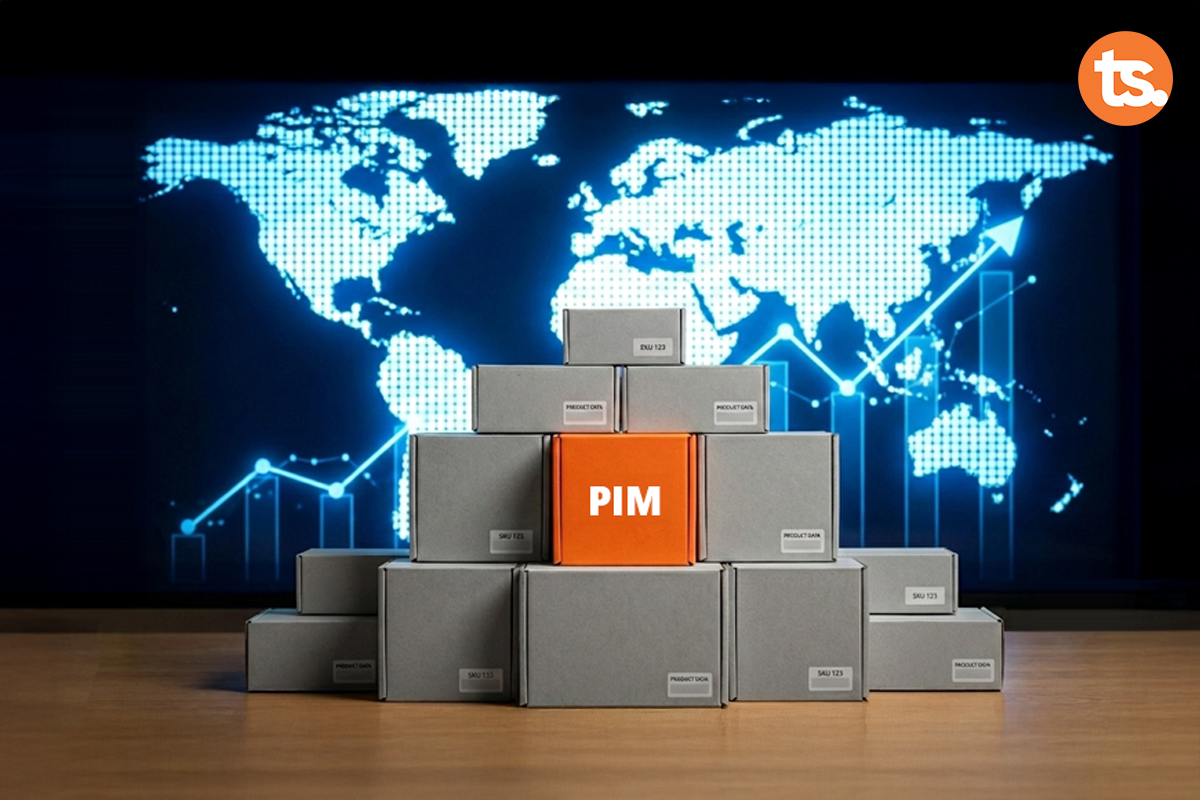
This is where the benefits of PIM start to become clear. A Product Information Management system creates a single source of truth for all product data, ensuring accuracy and consistency across e-commerce platforms, marketplaces, print catalogs, and sales teams.
At ThoughtSpark, we specialize in data, AI, and digital transformation. We help organizations implement AI-enhanced PIM strategies that turn product information into a strategic asset, enabling faster innovation and measurable ROI.
Did You Know?
PIM management is 6x faster than Excel, yet 70% of retailers still rely on spreadsheets—leaving revenue on the table.
What Is Product Information Management?
Product Information Management (PIM) is a centralized platform that collects, manages, enriches, and distributes product information across all channels. Think of it as the command center for your product catalog—handling descriptions, specs, images, pricing, translations, and more.
In 2026, with the global PIM market valued at $15.62 billion and projected to nearly double to $31.98 billion by 2029 (CAGR 15.4%), adoption is accelerating because businesses can no longer afford inconsistent data in an era of instant customer expectations
Top 10 Benefits of PIM
1. One Single Source of Truth
It stops everyone in your company from using different, conflicting information.
Example: Imagine your warehouse has the weight of a coffee maker as 5 kg, but the website lists it as 3 kg. With a PIM, everyone—sales, web team, customer service—pulls the correct 5 kg data from one central hub, eliminating confusion and errors.
2. Update Everything at Once, Instantly
Change information in one place, and it updates automatically everywhere you sell.
Example: You need to lower the price of a jacket for a flash sale. Instead of manually logging into Amazon, Shopify, and Walmart to change it, you update the price once in the PIM, and it pushes the new price to all those stores simultaneously.
3. Fewer Costly Mistakes
It drastically reduces human errors that lead to returns, bad reviews, and lost sales.
Example: A customer buys a blue shirt online but receives a red one because the warehouse had the wrong color code. A PIM ensures the "SKU 123" is always linked to "Blue" across all systems, so the right item is always shipped.
4. Sell on More Channels Easily
It formats your product info to meet the specific requirements of any new sales platform.
Example: You want to start selling on Home Depot's marketplace. Their system needs unique codes and specific image sizes. Your PIM can automatically reorganize and export your product data into Home Depot's exact required format, saving you weeks of manual work.
5. Launch New Products Faster
It streamlines and organizes the process of getting a product ready for sale.
Example: To launch a new smartphone, your marketing team needs descriptions, the tech team needs specs, and sales needs distributor info. A PIM provides a shared checklist and workspace where all teams can complete their parts efficiently, cutting the launch time from weeks to days.
6. Give Shoppers Richer, Better Information
It allows you to easily add all the details (videos, manuals, ingredient lists) that help customers feel confident buying.
Example: For a new blender, you can store and manage not just photos, but also a "how-to" video, the PDF instruction manual, a recipe booklet, and a detailed nutritional guide for smoothie mixes all in the PIM, making your product page much more helpful.
7. Make Your Team More Collaborative
It gets your marketing, sales, and support teams on the same page—literally.
Example: When customer support gets a question about a product's compatibility, they can look in the PIM and see the exact, approved answer that the product manager wrote, instead of guessing or giving inconsistent information.
8. Improve Your Search Engine Ranking
Complete, well-organized product data is what search engines like Google love to show.
Example: A PIM helps you ensure every product page has a unique title, a complete description, and properly tagged "alt text" for images. This gives search engines more clear signals about your products, helping you rank higher in search results.
9. Expand Globally Without the Headache
It neatly organizes all the different languages, currencies, and local regulations for international markets.
Example: Selling a hair dryer in the US, UK, and Germany? The PIM can store the product description in English (US and UK versions) and German, list prices in dollars, pounds, and euros, and track the different electrical compliance labels required for each country.
10. Save Money and Increase Profit
PIM automates manual work, reduces errors, and helps sell more—all of which improve your bottom line.
Example: By eliminating manual data entry jobs, reducing product return rates from wrong info, and boosting sales with better product pages, the benefits of PIM pays for itself. The savings and new revenue directly increase your profit margins.
Ready to Experience the Benefits of PIM?
Don’t let scattered product data hold your business back in 2026.
If you’re serious about efficiency, revenue growth, and digital leadership, let’s talk.
Schedule a free PIM strategy consultation with ThoughtSpark today
We’ll analyze your current challenges and map out a clear path to leverage benefits of PIM for growth, efficiency, and unbeatable customer experiences.